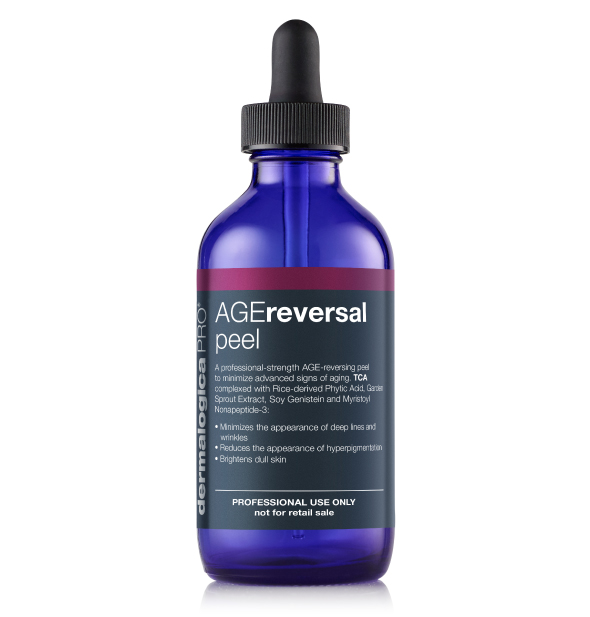
Professional Peel
Professional-strength AGE-reversing TCA peel with Rice-derived Phytic Acid, Garden Sprout Extract, Soy Genistein and Myristol Nonapetide-3 minimizes the appearance of advanced signs of aging.
| Professional | 4.0 FL OZ |
| Professional | 0.50 FL OZ |
Apply to face using the Dermalogica Application Method. If you’re including the neck, begin there and work your way up to the forehead.
Evaluate client’s sensations and skin throughout; if your client is experiencing extreme irritation, you may fan the face or use tapotement movements with gloved fingertips to help alleviate the sensation. If no extreme sensations are present, you may apply additional layers if desired.
a. When applying additional layers, time them approximately 1-2 minutes apart and be sure to track your client’s sensation level throughout. b. Do no apply more than two layers on chest and neck.
[warning] This product can expose you to chemicals including Trichloroacetic Acid, which is known to the State of California to cause cancer. | [contraindication] Clients with darker skin types (Fitzpatrick scale IV and higher) should not be treated with TCA, as they have an increased risk of Post-Inflammatory Hyperpigmentation (PIH).